
Initial test results for biobased adhesive
Initial Test Results for Biobased Adhesive: Progress Made, Focus on Bond Strength
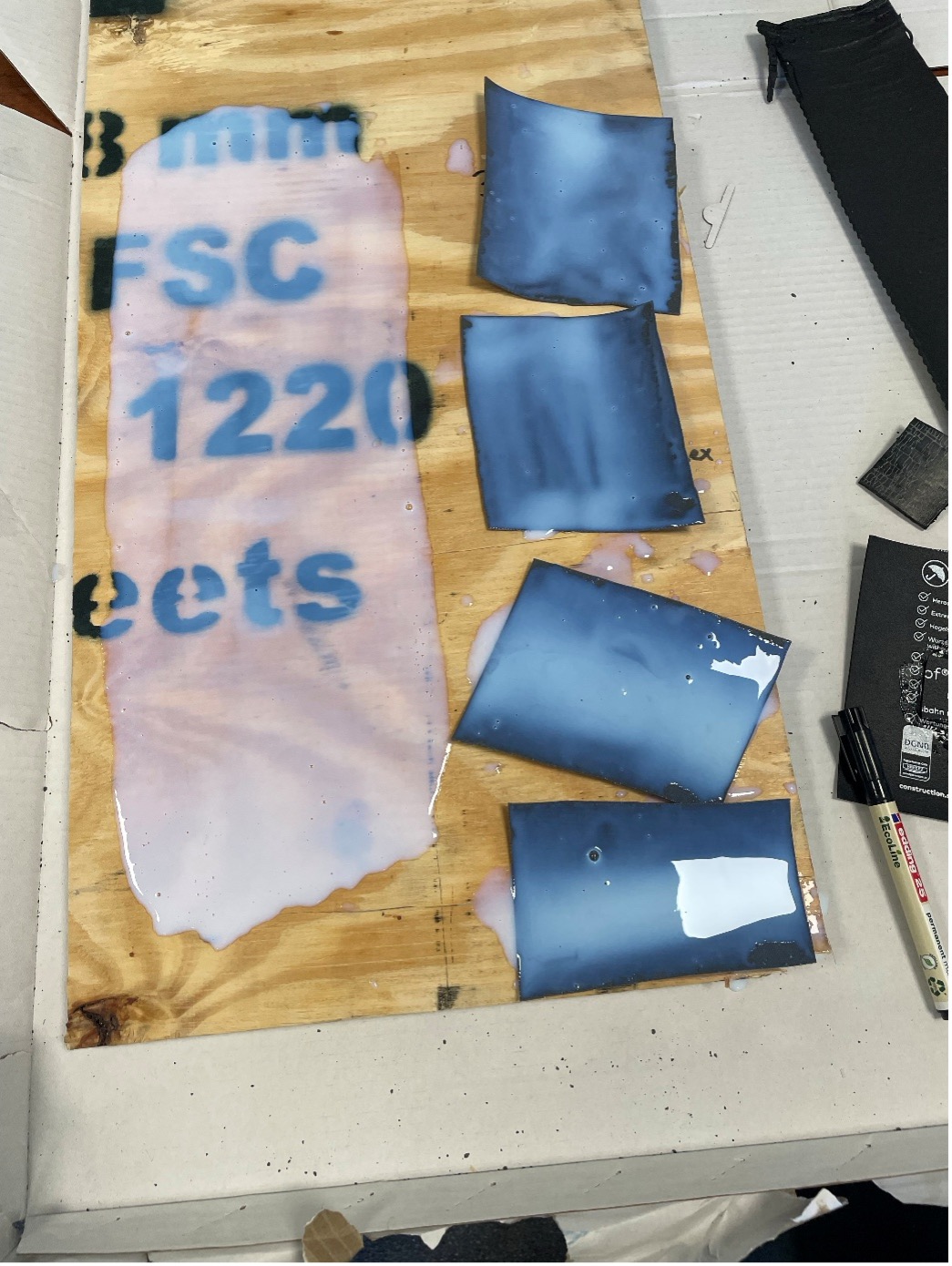
Extensive field tests were conducted with the biobased adhesive at our facility in Heemskerk. The results are promising and clearly indicate where our focus should lie.
Dozens of combinations of roofing materials and substrates were tested—on wood, steel, concrete, and insulation materials—using EPDM, bitumen, and PVC as the primary roofing types. The tests focused on multiple variables simultaneously: mixing ratios with water, the time of application (including pre-drying), and the effect of heating on drying time. This yielded a set of useful data that has been compiled into an initial evaluation.
What are the findings?
- Adhesion to loose substrates works well
The biobased adhesive adheres well to the tested materials. That provides a solid foundation for further development. - Bond strength requires further optimization
The required forces are not yet being achieved in all cases. This is the key development focus for the upcoming phase. - Overlapping joints require extra attention
Bonding materials together—a process known as overlapping—has proven to be more difficult than expected and is now the focus of a separate line of research.
Next step: laboratory validation with partners
Based on that data, the base material will be further optimized. This step aligns with the project’s objective of further developing the biobased adhesive into a fully market-ready product.
TRL 4 → 9
The project aims to further develop the bio-based adhesive from laboratory-proven (TRL 4) to fully market-ready (TRL 9).
This project is made possible in part by the Just Transition Fund (JTF), part of the European program for a just transition in the IJmond region.
Share this information with others
Most Recent Posts
September 21, 2026

September 21, 2026

September 21, 2026





